
Ionosfera-M launch adds two satellites for space-weather monitoring
Ionosfera-M 3 and 4 launched from Vostochny to complete a four-satellite space-weather system, carrying an ozone instrument with their ionospheric measurements.
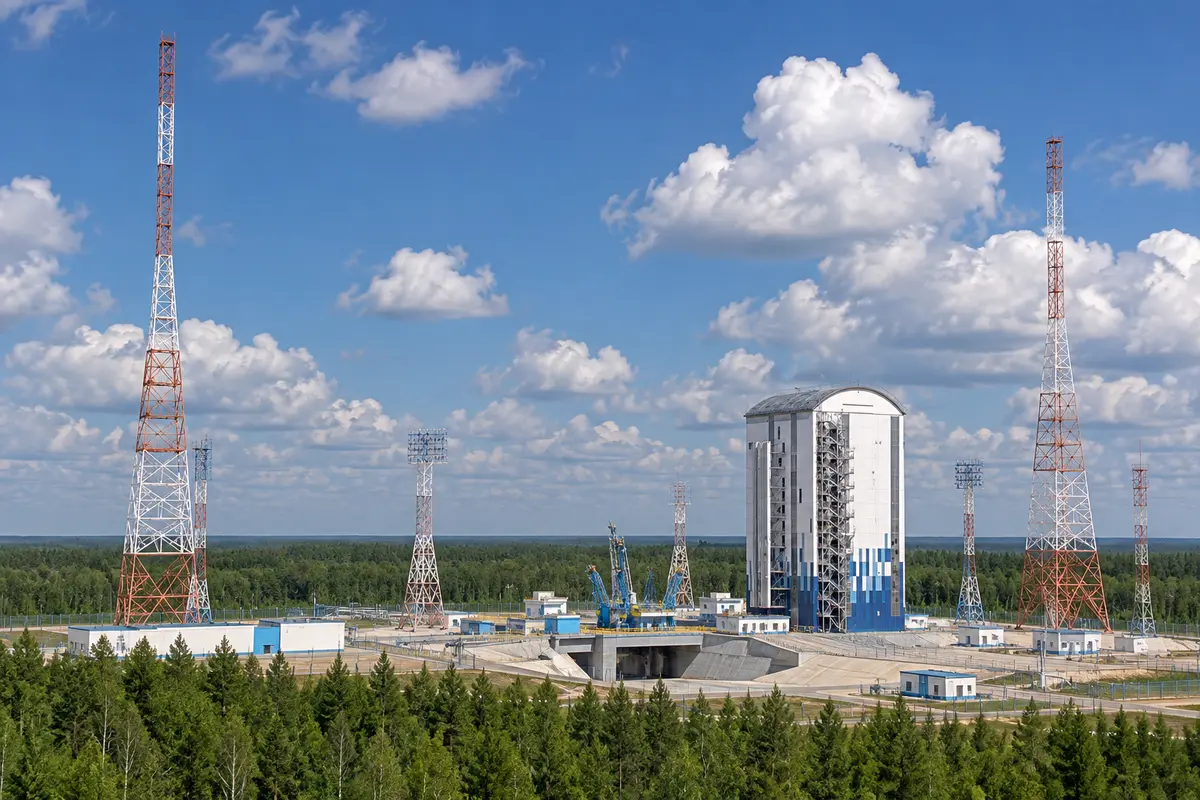
A Soyuz-2.1b rocket lifted off from Vostochny on Jul 25, 2025, carrying Russia's Ionosfera-M 3 and 4 toward orbit. Liftoff occurred at 05:54 GMT, or 08:54 Moscow time. The satellites were intended to complete a quartet operating approximately 820 kilometres above Earth. Their orbital plane was to be perpendicular to the first pair's, launched in November 2024. The new pair also carried the Ozonometr-TM ozone instrument.
The rocket carried 18 secondary payloads, including Nahid-2, a communications satellite from Iran, and 17 Russian CubeSats. One CubeSat had a 16U format; sixteen had a 3U format. A standard U measures ten centimetres on each side. The launch webcast ended about ten minutes after liftoff, leaving satellite deployment unconfirmed in the early launch coverage.

The charged atmosphere under observation
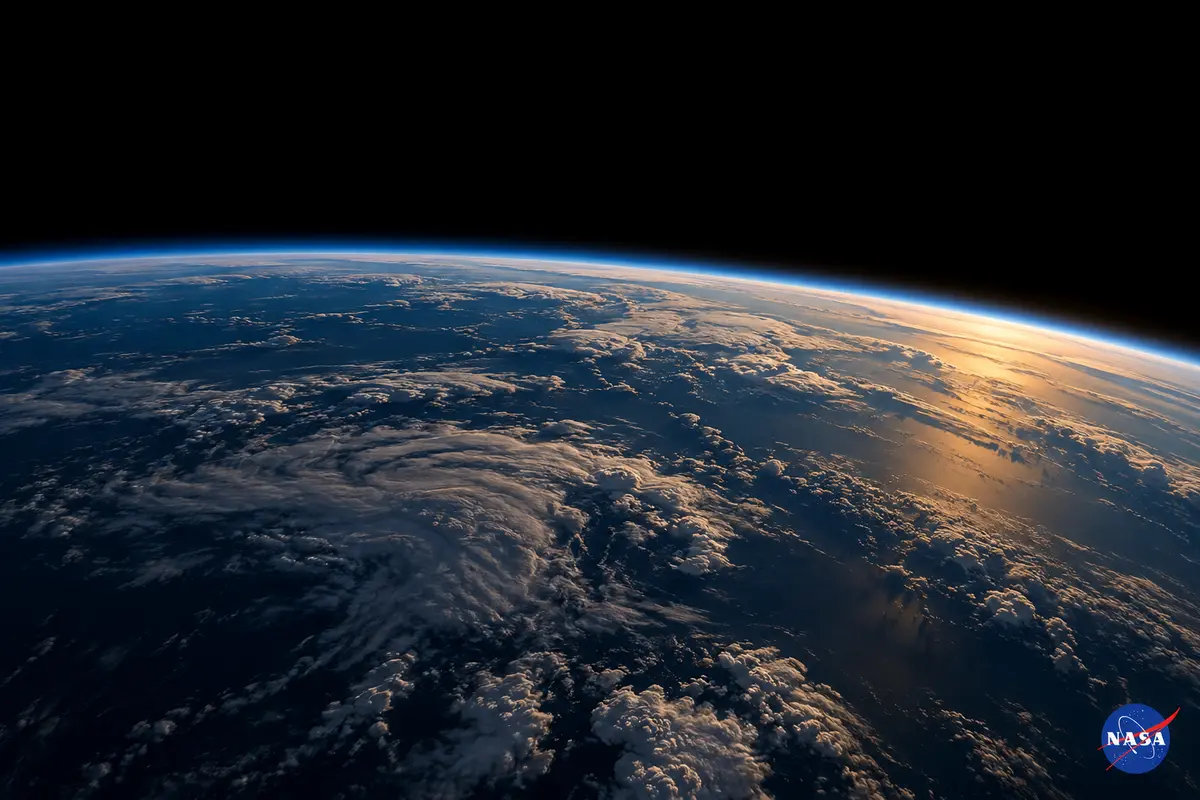
The ionosphere contains electrically charged particles created when sunlight removes electrons from atmospheric atoms and molecules. This plasma supports the propagation of radio signals over long distances. Its structure changes over the day as solar illumination changes. Near the magnetic equator, charged particles move upward and outward under the combined influence of gravity and Earth's electric and magnetic fields. They form two relatively dense bands, known as crests, north and south of the equator.
After sunset, low-density pockets called plasma bubbles can develop as solar energy fades. The differences in density between these structures can interfere with radio communications and GPS signals. NASA's GOLD mission observes crests and bubbles over extended periods from a geostationary orbit above the Western Hemisphere. That observing geometry differs from Ionosfera-M's low orbit. The physical structures include:
- Dense equatorial crests.
- Low-density plasma bubbles.
- Charged particles moving along magnetic fields.

A wider programme with separate spacecraft
The Ionozond programme serves the Russian Academy of Sciences and the Federal Service for Hydrometeorology and Environmental Monitoring. Its ionospheric satellites and proposed solar-monitoring spacecraft have different roles. On Nov 14, 2024, Space Research Institute director Anatoly Petrukovich said payload development for the Zond-M solar spacecraft had been suspended because of budget cuts. He distinguished that suspension from preparations for the next Ionosfera-M pair, whose equipment the institute had already made.
Petrukovich then expected the second Ionosfera-M launch in the middle of 2025, with final operations in progress. The first two satellites had launched from Vostochny on Nov 5, 2024, in Moscow time. He estimated that roughly 90% of the solar-activity data needed for forecasting came from foreign sources. That estimate and the payload suspension describe the programme's position in November 2024. Zond-M was intended to monitor solar activity, while the Ionosfera-M quartet would study near-Earth conditions as another part of the Ionozond system.
Leave a comment