
XRISM: cold detectors and the moving X-ray universe
XRISM combines cryogenic spectroscopy with wide-field imaging. Its first light, detector engineering and dated scientific results reveal hot cosmic gas in detail.
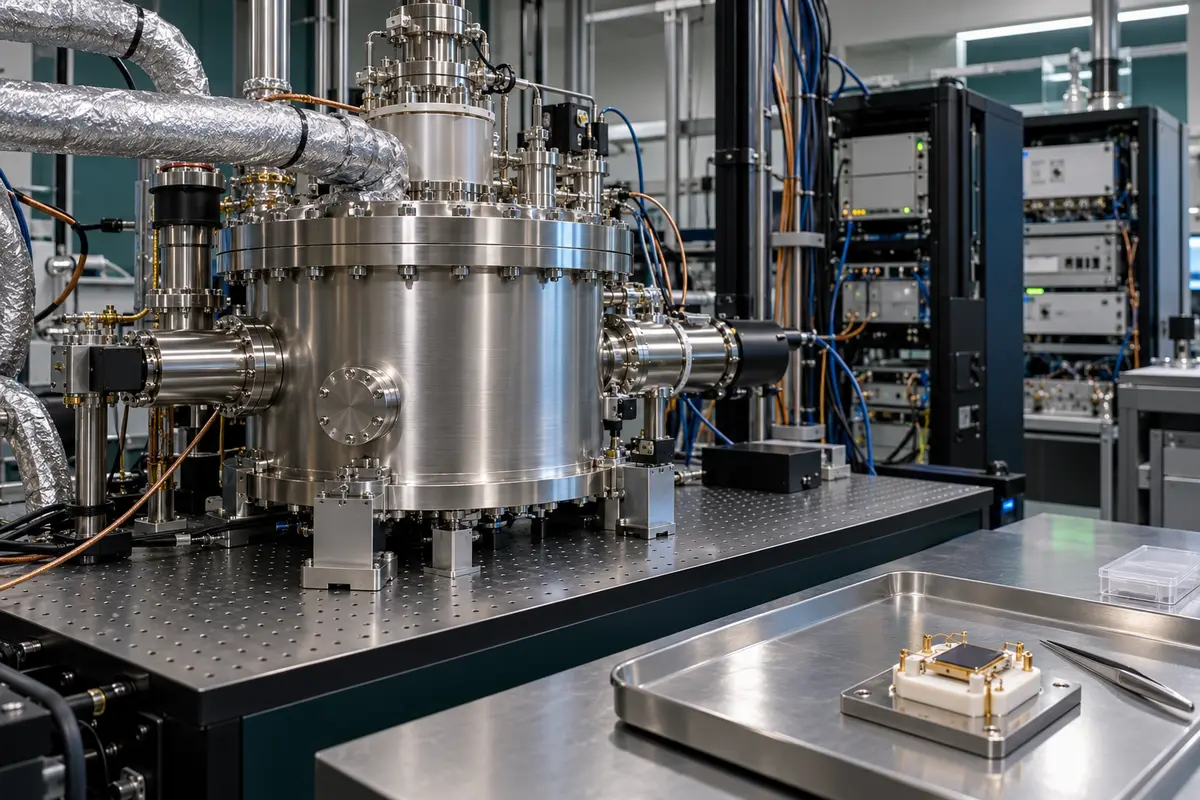
First light from an X-ray observatory
XRISM’s first public observations paired a stellar explosion’s chemical signature with a wide view of a galaxy cluster. The Japan-led mission, developed with NASA and contributions from ESA, launched in September 2023. Resolve measured silicon, sulfur, calcium, argon and iron in N132D, a roughly 3,000-year-old supernova remnant in the Large Magellanic Cloud, about 160,000 light-years away. NASA project scientist Brian Williams connected those spectral features with measurements of composition, temperature and gas motion.
Xtend imaged Abell 2319, a galaxy cluster approximately 770 million light-years away and 3 million light-years across. Richard Kelley, the mission’s US principal investigator, emphasised the combination of imaging and physical measurements. Resolve’s protective detector door remained closed, limiting lower-energy observations; Xtend was unaffected.
Two telescopes share a launch
XRISM left Tanegashima Space Center aboard an H-IIA rocket on September 7, 2023, local time in Japan; the corresponding UTC date was September 6. The same launcher carried the separate Smart Lander for Investigating Moon, or SLIM. XRISM’s two observing instruments each sit behind their own X-ray Mirror Assembly. NASA’s Goddard Space Flight Center designed and built both assemblies, using grazing-incidence optics to direct incoming X-rays toward the detectors. The mirrors collect radiation for different measurements within one observatory.

Each assembly contains hundreds of concentric aluminium mirror shells, organised into four quadrants. Across the two assemblies, more than 3,200 individual mirror segments were manufactured. NASA and JAXA jointly developed Resolve, while JAXA developed Xtend. The mission’s upper design energy reaches 12,000 electron volts, far above visible light’s approximately 2–3 electron volts. Resolve’s helium container and multistage mechanical cooling support its unusually cold detector. Xtend supplies a broader view, covering an apparent area about 60% larger than the average full Moon, alongside Resolve’s detailed energy measurements.
Rebuilding after Hitomi
XRISM followed the loss of Hitomi, also called ASTRO-H, which broke apart after an uncontrolled spin on March 26, 2016. ISAS director general Tsuneta Saku personally brought NASA a recovery proposal. Paul Hertz, Mark Clampin and John Grunsfeld faced questions about scientific priority, affordability and assurance. Hitomi’s short-lived Perseus-cluster spectrum supported the scientific case. With no additional congressional funding available, NASA could redirect funding intended for Hitomi operations and retain the Goddard team’s expertise. The new spectrometer was to reuse the existing design.
The first cost estimate was rejected before a detailed review of retained infrastructure produced an affordable plan. NASA and JAXA also extended joint work into systems engineering and mission assurance. Remote hardware-monitoring arrangements, established partly to reduce travel, helped the teams continue during pandemic border closures. A helium leak eventually required specialist intervention: NASA-supplied filters had to be removed to trace it, a task reserved for trained personnel. Both governments authorised exceptional travel so the necessary team could reach the flight hardware in Japan.

What 36 pixels measure
Resolve’s detector has just 36 pixels in a six-by-six array measuring about five millimetres across. Its temperature is around 50 millikelvins, or 0.05 degrees above absolute zero. An incoming X-ray photon deposits energy as heat. Measuring that tiny temperature rise gives the photon’s energy, allowing many individual detections to be assembled into a spectrum. This is a different measurement from assigning visible colours to millions of camera pixels: Resolve separates closely spaced X-ray energies to examine the emitting material’s physical properties.
The positions of spectral features also carry information about movement. Gas moving toward the observer shifts a feature toward higher energy; motion away shifts it toward lower energy. Such Doppler shifts let astronomers investigate the motions of material that cannot simply be followed across a conventional photograph. NASA’s contribution extends beyond the sensor itself to detector subsystems, the mirror assemblies and the Science Data Center’s processing pipeline. Goddard also hosts the General Observer programme, connecting the instrument’s specialised measurements with observing proposals from the research community.
Absorbers, thermometers and thermal isolation
Resolve’s pixels combine mercury telluride absorbers with silicon-thermistor thermometers. Each pixel is thermally isolated, with a weak connection to the cold temperature bath. Low heat capacity makes the temperature rise from a single photon measurable; the thermometer tracks that change. The material, thermal connection and operating temperature therefore belong to the same detector design. Resolve uses this thermistor technology, while superconducting transition-edge sensors discussed for future observatories represent a different detector approach. They should not be confused with the sensors already flying aboard XRISM.

EPIR Technologies worked with NASA through Small Business Innovation Research funding to improve the mercury telluride material. Lower specific heat helped the absorbers deliver the required sensitivity. Combined with a lower operating temperature, the improved material allowed absorber width to increase from 0.64 to 0.83 millimetres while retaining lower heat capacity. NASA’s detector history spans earlier mission attempts and successive improvements in energy resolution. The array design itself did not change between ASTRO-H and XRISM, preserving a mature instrument design for the recovery mission rather than introducing another detector architecture.
Calibration and a wider field
By March 8, 2024, XRISM had completed commissioning checks and entered nominal operations. SRON contributed Resolve’s filter wheel and its calibration source. A Resolve spectrum of the Perseus cluster, approximately 240 million light-years away, illustrated the instrument’s roughly five-electron-volt spectral resolution. SRON astronomer Elisa Costantini explained that the widths of the hot gas’s spectral lines provide clues about turbulence, helping researchers investigate the material’s origin and dynamics. The widths are physical measurements of the emitting gas, alongside the elements identified by the lines.
Xtend’s field spans 38 by 38 arcminutes. Its image of SN1006 encompassed the whole supernova remnant in one exposure, providing a broad counterpart to Resolve’s spectroscopy. The stellar explosion occurred in 1006 AD; its expanding remnant is approximately 60 light-years across and is still growing at about 5,000 kilometres per second. Measurements of the gas’s elemental abundances help astronomers study the exploded star and its explosion mechanism. These examples put the two instruments’ complementary fields and measurement strengths into actual observing practice.

Iron around an active galactic nucleus
In May 2024, Resolve observations of NGC 4151 exposed iron’s spectral fingerprints near a supermassive black hole. Gas and dust feeding the black hole form an accretion disc, with a thicker, doughnut-shaped torus farther out. The galaxy’s central activity is unusually bright and variable, making it a useful early observing target. A narrow emission feature just below 6.5 kiloelectron volts indicated iron fluorescence. X-rays produced near the black hole illuminate cooler material in the disc, causing iron to emit a characteristic signal.
Absorption features around seven kiloelectron volts trace another part of the surrounding material. Cooler iron associated with the torus can remove X-rays at particular energies rather than produce the emission peak. The locations of these components remain a physical interpretation of the spectrum, rather than a photograph directly separating every structure. Williams described the peaks and dips as clues to the elements present and the fate of matter approaching the black hole. Other detectable elements, including sulfur, calcium and argon, supply additional information when the observed source produces suitable features.
Later measurements of the supernova remnant
Scientific results presented on September 20, 2024, extended the initial view of N132D. Resolve’s measurements supported a doughnut-shaped distribution of hot plasma rather than the previously assumed simple spherical shell. Doppler measurements gave an apparent expansion speed of about 1,200 kilometres per second. The analysis also found iron ions at an extraordinary temperature of approximately ten billion kelvins. That figure concerns the iron component heated by shock waves; it is not a single temperature assigned to every substance throughout the entire remnant.
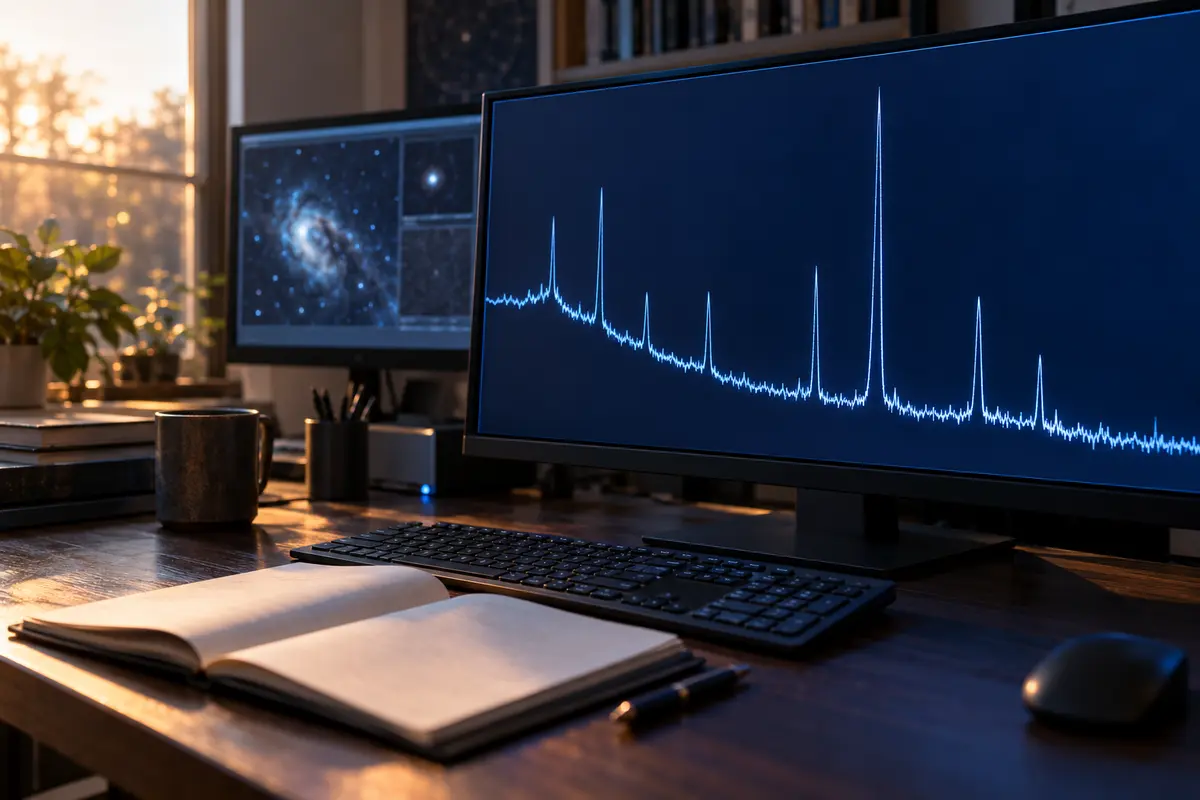
Inward-travelling shock waves had been predicted to heat the iron so strongly, but those conditions had previously escaped direct observation. The remnant’s gas preserves information about the original massive star and the dispersal of heavy elements after its explosion. Alongside the scientific analysis, the team refined instrument performance and data processing using 60 key targets. A further 104 observation programmes were selected from more than 300 proposals for the following observing year. ESA’s contribution of hardware and scientific advice secured eight percent of the mission’s available observing time.
Gas in a closely orbiting stellar pair
Results announced on November 25, 2024, examined Cygnus X-3, approximately 32,000 light-years away. A Wolf-Rayet star and a compact companion orbit each other every 4.8 hours. The companion is likely a black hole, but that identification remains unconfirmed. Resolve watched the system for 18 hours in late March 2024, covering several orbits. The massive star sheds a strong wind, some of which is captured and heated near the companion. Dust obscures the system in visible light, while X-rays expose its gas dynamics.
Ralf Ballhausen and colleagues separated an extensive stellar outflow from a turbulent structure that may be a wake near the compact companion. Absorption features shifted toward higher energies, corresponding to gas approaching at up to 1.5 million kilometres per hour. Emission features shifted toward lower energies, tracing slower material moving away. Some absorption valleys were stronger than the corresponding emission peaks. The team linked that imbalance to moving wind material absorbing a wider range of the companion’s X-ray energies. The interpretation remains tied to this binary’s particular geometry and dynamics.

Sulfur between stars
Research publicised on July 23, 2025, used XRISM to measure sulfur in both gaseous and solid forms between stars. Lía Corrales led the study, published on June 27 in the Publications of the Astronomical Society of Japan. The team used the bright binary GX 340+0, more than 35,000 light-years away, as a background X-ray source. Intervening material absorbed some of that light. Its density allowed enough radiation through for Resolve to measure the signatures imprinted by sulfur along the line of sight.
Measurements of a second binary, 4U 1630-472, supported the result. Earlier ultraviolet observations had found gaseous sulfur, but its disappearance in denser molecular clouds raised questions about where it went. The XRISM analysis detected a solid component possibly combined with iron. Costantini’s laboratory modelling helped compare candidate compounds with the astronomical measurements. Pyrrhotite, troilite and pyrite were proposed as compatible iron-sulfur materials. Those possibilities are not definitive identifications of every grain: the researchers continued laboratory campaigns to improve the comparisons and investigate sulfur’s distribution between interstellar gas and dust.
A neutron-star wind with unexpected properties
On February 25, 2024, XRISM observed GX13+1, a neutron star fed by a hot accretion disc. Shortly before the scheduled observation, the system brightened toward, or beyond, the Eddington limit, where radiation strongly opposes further infall. Results announced on September 17, 2025, revealed an unusually dense outflow moving at around one million kilometres per hour. Chris Done’s team compared this slow, smooth wind with faster, clumpier winds observed around supermassive black holes operating near the same relative luminosity limit.

The black-hole winds used for comparison can reach 20–30 percent of light speed, exceeding 200 million kilometres per hour. The difference remained a puzzle rather than a settled universal rule. Done and colleagues proposed that accretion-disc temperature could help explain it: the larger discs around supermassive black holes tend to produce ultraviolet radiation, while hotter stellar-binary discs emit X-rays. Ultraviolet light interacts more readily with the material and might accelerate it more effectively. The chance brightening of GX13+1 gave Resolve an opportunity to examine this proposed mechanism under unusually intense conditions.
Rare elements in Cassiopeia A
On December 4, 2025, scientists announced clear X-ray detections of chlorine and potassium in Cassiopeia A. Toshiki Sato led the study with Kai Matsunaga and Hiroyuki Uchida. The remnant lies about 11,000 light-years away, spans roughly ten light-years and is more than 340 years old. A neutron star remains at its centre. Two Resolve observations made in December 2023 revealed the rarer elements at unexpectedly high ratios. The detector also found a possible phosphorus signature, a less certain result than the chlorine and potassium detections.
The researchers compared Resolve’s observing fields with Chandra imagery and located stronger potassium evidence in the southeast and north. Weaker evidence in the west suggested an uneven distribution. They proposed that disruption and large-scale mixing of the original star’s nuclear-burning layers could have promoted chlorine and potassium production before the explosion. Underlying asymmetry might also help explain the pattern. These remain interpretations of the measured abundances and locations. The observations add constraints to models of stellar nuclear reactions without fully resolving how massive stars explode and distribute their products.

A galactic wind measured in 2026
Results published on March 25, 2026, applied Resolve’s spectroscopy to M82, a starburst galaxy about 12 million light-years away. It forms stars at roughly ten times the Milky Way’s rate and has a cooler outflow extending up to 40,000 light-years. Erin Boettcher’s team measured the central hot gas using broadened iron emission lines. The inferred speed exceeded three million kilometres per hour, while elemental signals indicated a temperature of about 25 million degrees Celsius. Thermal pressure could supply enough energy to drive the larger, cooler wind.
- Hot gas leaves the central region at approximately seven solar masses per year.
- The model requires about four solar masses annually to power the cooler outflow.
- The destination of the remaining three solar masses remained unresolved.
Edmund Hodges-Kluck highlighted that mass-flow discrepancy as an open question. The result allowed a thermal-pressure explanation without requiring cosmic rays as the principal driver, although their contribution was not excluded. Continued observations and modelling could investigate the additional escaping gas and refine the connection between stellar activity and the galaxy-wide outflow.
Leave a comment