
Inside Sila’s Moses Lake silicon-anode factory
Sila’s manufacturing ramp connects customer qualification, local training, feedstock supply and later financing and quality milestones.
Operations begin in Moses Lake
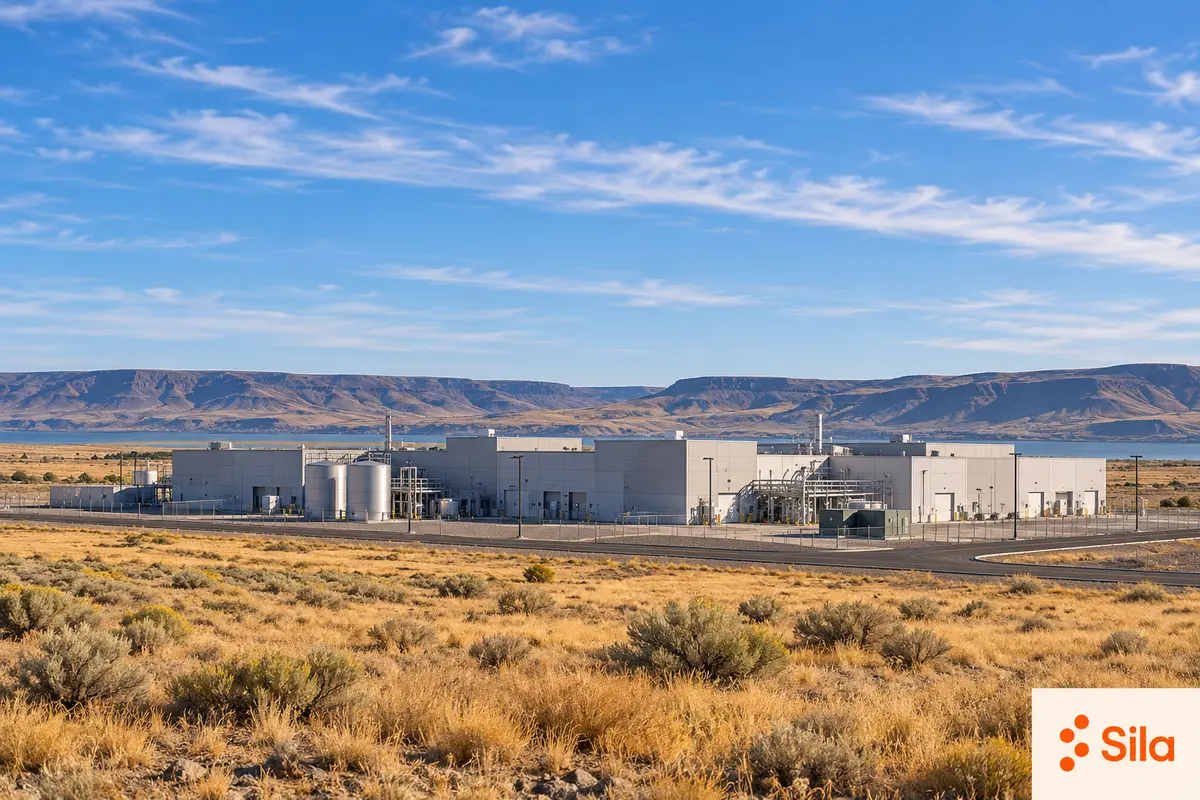
Sila began operating its silicon-anode factory in Moses Lake, Washington, on September 23, 2025. The team was testing and refining process recipes, with initial batches of Titan Silicon still to come. The facility occupied more than 600,000 square feet on a 160-acre site. Sila described initial capacity equivalent to material for 2–5 GWh of batteries and a potential expansion to 250 GWh within five years. Those figures described material-supply capacity and a development ambition, rather than measured battery production.
The plant uses Columbia River hydropower, according to Sila. Its intended markets extend beyond electric vehicles to consumer electronics, drones, satellites and augmented- and virtual-reality equipment. Sila also planned to hire and train up to 500 employees over three to five years. Co-founder and chief executive Gene Berdichevsky connected the factory’s opening with the company’s move from materials innovation into large-scale domestic manufacturing.
A material designed for existing cell formats
Sila introduced the Titan Silicon brand on April 4, 2023, for its nano-composite silicon anode material. The company had already brought its technology into consumer electronics, including the WHOOP 4.0 wearable. Titan Silicon was intended to replace graphite partly or completely and to work with cylindrical, pouch and prismatic cells. Sila presented compatibility with existing cell manufacturing as a route to adoption, rather than requiring customers to choose a single new battery shape.
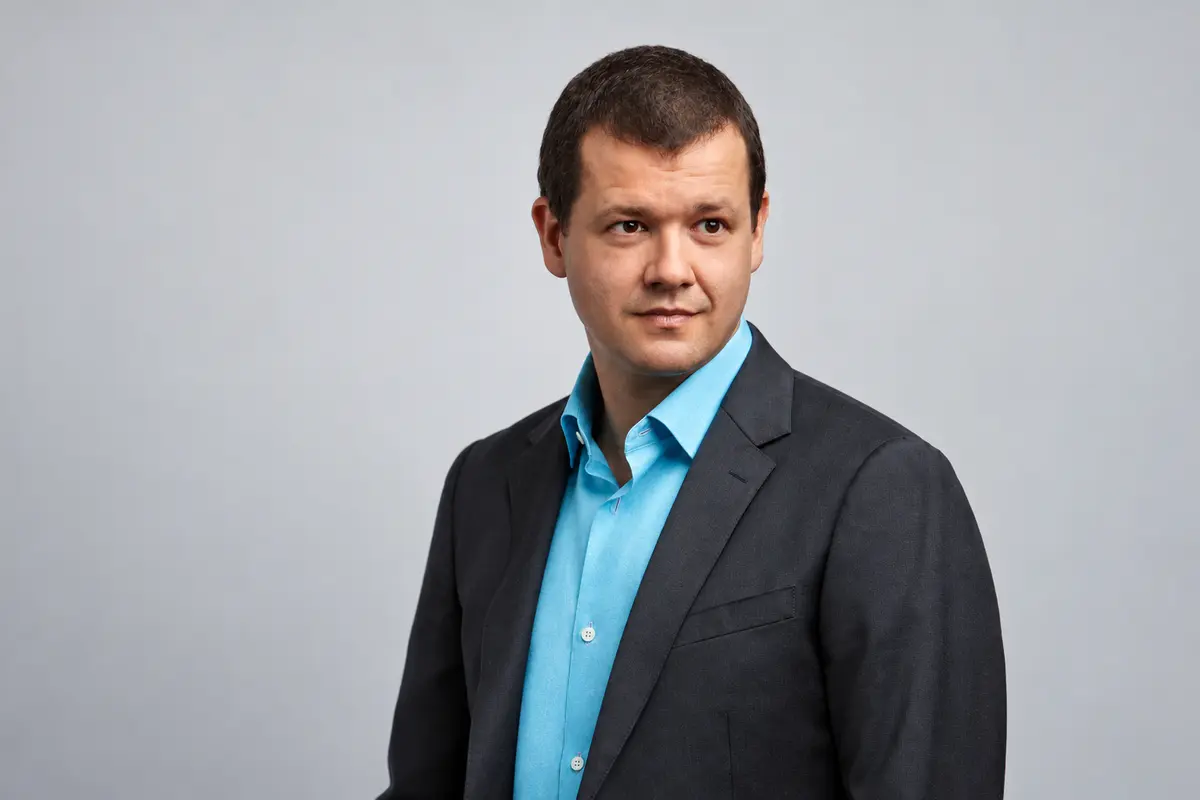
The performance figures were company claims with different comparison bases. Sila advertised a 20% increase in vehicle range, potentially reaching 100 additional miles for some EVs, and charging from 10% to 80% in 20 minutes, with a future path toward 10 minutes. It also claimed possible battery-weight reductions of up to 15% and space reductions of 20%. These were product propositions for battery and vehicle designers, rather than measured results from the newly opened Moses Lake factory or guarantees for every cell using silicon.
Panasonic’s procurement agreement
Panasonic Energy agreed to procure silicon anode material from Sila for next-generation lithium-ion batteries. The North American announcement appeared on December 13, 2023. The agreement connected future supply from Washington with Panasonic’s battery-development programme. Panasonic wanted to raise volumetric energy density from 800 Wh/L to 1,000 Wh/L by 2031, a 25% target increase. That objective concerned the energy stored in a volume of battery, rather than the weight of anode material alone.
Silicon’s attraction and its engineering difficulty appeared together in Panasonic’s account. Its theoretical capacity is approximately ten times that of graphite, but expansion and contraction during charging can degrade a battery. A material-level capacity advantage therefore does not mean a tenfold increase in whole-battery energy density. Panasonic expected Sila’s material to support higher-density cells while addressing these durability challenges. The procurement agreement established a planned supply relationship; it did not establish that automotive cells containing Moses Lake material were already being delivered when the contract was announced.

Converting an existing industrial building
The Moses Lake project entered Washington’s SEPA register on July 6, 2023, under city file PLN2023-0040. The proposal covered two phases of silicon-anode manufacturing, with an anticipated 2025 production start. Phase one included equipment and infrastructure for up to 600 tons annually; additional equipment in phase two would support expansion toward 4,000 tons annually. The application described an approximately 162-acre property containing an existing 613,000-square-foot building. These were planning-stage dimensions and proposed production quantities, distinct from later operational capacity statements.
The conversion required changes to interior walls, floors and ceilings, together with office refurbishment. Outside, the project included access roads, concrete service areas and pads for gas-storage vessels, abatement equipment, cooling-water systems and wastewater treatment. Grading would affect previously disturbed ground that had been agricultural land before industrial zoning. The proposal required no additional land or natural-resource disturbance beyond the existing site.
Construction and initial recruitment
By April 22, 2024, construction had been underway for six months. Sila reported that more than 85% of on-site preparation was complete, electrical and civil work was underway inside the building, and the first newly designed production equipment had arrived. It had hired 40% of the initial operating staff, who were supporting design and commissioning work. The schedule then called for construction completion in the first quarter of 2025 and qualified customer material beginning in the fourth quarter.

Commercial commitments were developing alongside the building. In addition to its publicly named Mercedes-Benz and Panasonic relationships, Sila announced two further automotive customer contracts and one consumer-device contract, without identifying those customers. The company distinguished between automotive customers replacing up to 85% of graphite in an anode and consumer-electronics customers replacing up to 100%. It also claimed field experience with longer device runtimes. The replacement percentages concerned different customer implementations; they were not a single recipe that every customer would use.
Private capital for production scale
Sila closed a $375 million Series G financing announced on June 27, 2024. Existing investors Sutter Hill Ventures and funds and accounts advised by T. Rowe Price Associates led the round. Bessemer Venture Partners, Coatue and Perry Creek Capital also participated, alongside other investors. The financing supported the delivery of Titan Silicon for automotive series production and the completion of the Moses Lake facility.
The company connected the investment with production equipment, manufacturing capacity and the demands of automotive customers. Sila was developing its own manufacturing technology while preparing material for customer qualification. In June 2024, the plant’s completion and automotive supply remained future milestones in Sila’s schedule. Ardea Partners acted as financial adviser on the transaction.

A local route into battery manufacturing
Sila announced a training partnership with Big Bend Community College and the Columbia Basin Technical Skills Center during a February 22, 2024, visit by Senator Maria Cantwell, Energy Secretary Jennifer Granholm and Governor Jay Inslee. A $2 million portion of Sila’s Department of Energy award would support scholarships, internships, coaching and hands-on curricula. The programmes were expected to enroll more than two dozen students by the end of 2024, with courses starting early in 2025. These were the partnership’s announced timetable and funding arrangements.
The Moses Lake roundtable brought together Sila, the college, Grant County’s economic development council, REC Silicon, Obsidian Renewables, Grant County Public Utility District and the Bonneville Power Administration. The visitors subsequently toured Group14 Technologies, another battery-materials manufacturer in the area. Each company had been selected for a $100 million federal award under the battery manufacturing programme funded through the Bipartisan Infrastructure Law. Group14’s separate factory modules and employment projections belonged to that company, while Sila’s education partnership addressed recruitment and training for its own manufacturing operation.
A longer contract for a production precursor
REC Silicon and Sila announced a long-term silane supply agreement on September 19, 2024. The agreement ran through 2031 and concerned domestically produced gas for Sila’s silicon-anode manufacturing. REC presented its Signature Silane as part of a supply relationship supporting the Moses Lake operation. The contract supported Sila’s commitment to deliver Titan Silicon to automotive customers from the fourth quarter of 2025. That date concerned Sila’s planned customer deliveries, rather than a stated date for the first silane shipment.

REC Silicon operated two plants in the United States, with combined stated capacity exceeding 30,000 metric tons of high-purity silane. The companies described their arrangement as supporting a domestic battery-materials supply chain. REC’s Signature Silane served applications beyond batteries, including power and memory devices and high-voltage transmission. The company was headquartered in Lysaker, Norway, and listed in Oslo. Its gas contract supplied a manufacturing input for Sila’s expanding material requirements, alongside the anode producer’s automotive customer agreements.
Engineering the cell around customer requirements
Sila formalized Battery Engineering Services on November 19, 2024, for consumer-electronics and micromobility manufacturers and their cell-making partners. The team would establish product requirements, work with a chosen cell manufacturer or help evaluate alternatives, and co-develop the chemistry and anode design. Customers without their own battery-testing facilities could use Sila’s cell-testing services. Support also extended through cell builds, linking the material supplier’s work with the device designer and the company manufacturing the finished cell.
Cell design priorities
- Energy density and the battery’s physical swelling.
- Power delivery and fast-charging requirements.
- Cycle life and other performance-validation requirements.
Sila said Titan Silicon already powered millions of consumer devices. It cited an unnamed newly launched wearable with complete graphite-anode replacement and nearly 20% higher energy density than earlier graphite-powered generations. Those consumer-device claims described a particular implementation and comparison; they did not establish automotive qualification for every material batch produced at Moses Lake.
Moving from batch production to larger reactors
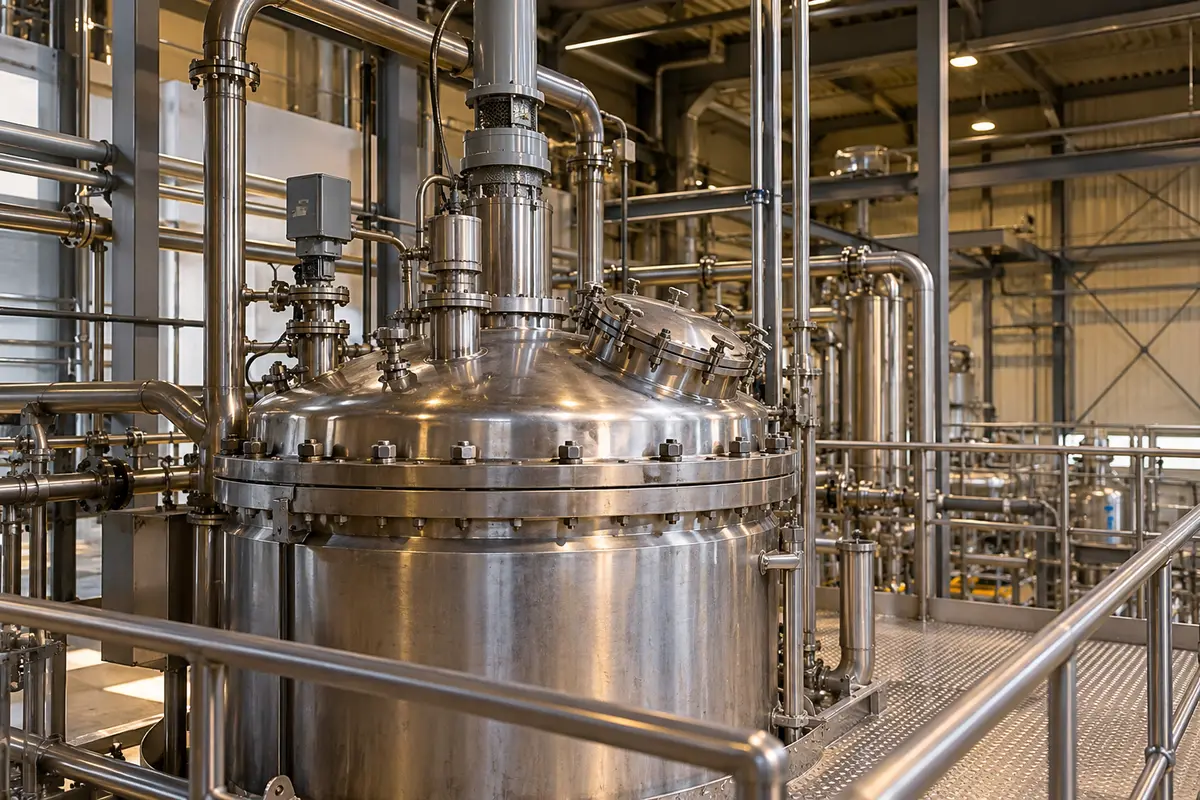
Sila retained chemical synthesis, key manufacturing-equipment design, tool design and process-control intellectual property in-house. Its 2024 manufacturing strategy centered on directly manufacturing its material rather than licensing the technology to other developers. Alameda’s automated, round-the-clock consumer-scale line used batch production and had stated capacity equivalent to material for up to 50 MWh of batteries annually. It would also produce qualification batches for the initial automotive launches later intended to receive production material from Moses Lake.
Moses Lake’s planned process incorporated larger advanced reactors, continuous material processing, online diagnostics, better precursor utilization and improved material handling. Sila intended to conduct factory construction in parallel with automotive cell qualification. In 2024, Sila’s eventual Moses Lake capacity ambition was up to 150 GWh annually, alongside a 2025 startup target. That historical expansion figure differed from later plans. It was a development projection, rather than a measurement of the operating factory’s output.
Commissioning the first processing unit
Sila began commissioning the first processing unit at Moses Lake in April 2025. The first unit had reached mechanical completion by April 15, bringing it into the transition toward an operational facility. Commissioning involved integrating systems, verifying equipment and reviewing safety and compliance. Production was then planned for the second half of 2025. The work concerned the plant’s equipment and systems before routine manufacturing, rather than a declaration that customer-qualified commercial output had already reached the plant’s eventual capacity.

The company connected the milestone with its transition from established consumer-electronics applications toward larger automotive requirements. Titan Silicon’s performance remained part of that commercial proposition: Sila promoted increased energy density and a future path toward faster charging. Those claims accompanied the commissioning programme but did not replace the equipment checks and operating preparation. The April milestone preceded the September announcement that recipe testing and refinement had begun at the operating factory. The two stages had different immediate tasks and should retain their respective dates.
Capital for the next manufacturing phase
Sila secured another $300 million in private equity financing, announced on July 21, 2026. Atreides Management and Sutter Hill Ventures led the investment. The money would support the ramp of gigascale anode manufacturing and the second phase of the Moses Lake plant. Sila described operations as having begun in autumn 2025 and production as ramping. This later financing was a separate transaction from the Series G round announced in June 2024.
Sila specified initial phase-one capacity of 2 GWh in July 2026, while retaining the potential for expansion up to 250 GWh within five years. The initial figure was more specific than the 2–5 GWh range given at opening. The expansion remained a company plan, with capital directed toward additional manufacturing scale. The initial phase and production ramp preceded the larger proposed build-out; the maximum planned capacity remained a development target, rather than installed capacity or a volume already delivered to customers.

Quality systems and traceability
Sila announced ISO 9001:2015 certification for the Moses Lake facility on August 20, 2026. The certification concerned its quality-management system. The company described manufacturing execution systems, recipe control and traceability as parts of the production operation, together with raw-material requirements, reactor readiness and equipment redundancy. These systems supported controlled manufacturing and records of material processing.
The company distinguished Moses Lake from its earlier Alameda operation. Alameda had received its own ISO certification in 2022, and Sila associated years of round-the-clock production and a yield exceeding 95% with that established facility. Those figures were not Moses Lake yield measurements. Sila also identified IATF 16949, the automotive quality-management standard, as a future objective. The announced ISO milestone and the planned automotive certification therefore had different statuses, while the operating-history claims belonged to a different plant.
Organizing the production ramp
Sila named Chris Dougher chief operating officer and Gwen Hsu vice president of product in September 2026. Dougher’s responsibilities covered manufacturing, supply chain, capital projects, quality, planning and industrial engineering. Hsu’s product role accompanied the company’s preparations for larger-scale supply. In the September 17 announcement, Sila characterized its history as seven years establishing the science followed by eight years working on scale. It said the manufacturing process had advanced from gram-sized batches to ton-sized batches, while hundreds of tons per day remained a future ambition. Batch mass and a daily production target describe different quantities; the appointment announcement did not turn either into a verified annual output figure. Together with the financing and quality milestones dated earlier in 2026, the appointments formed a later stage in the factory’s development, following the commissioning and opening steps of 2025.
Leave a comment