
Fervo’s geothermal wells: from Project Red to Cape Station
Fervo’s geothermal programme links horizontal wells, reservoir monitoring and power contracts. Project Red and Cape Station trace the work from pilot tests to commercial generation.
Capital for a larger geothermal project
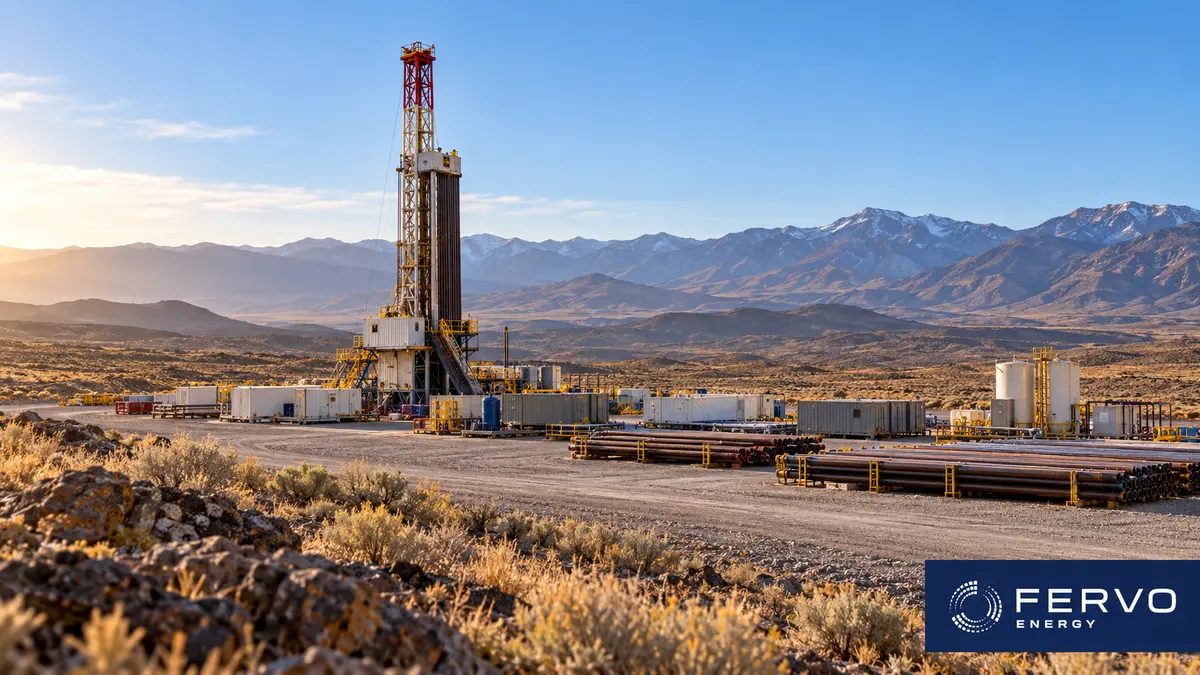
Fervo Energy announced a $244 million funding round on February 29, 2024, led by Devon Energy. Other participants included John Arnold, Liberty Mutual Investments, Mercuria, Congruent Ventures and Capricorn. The company, co-founded by Tim Latimer in 2017, was developing Cape Station in Beaver County, Utah, with a planned capacity of 400 megawatts at that stage. Its earlier Nevada project had already reached the grid. Devon brought experience in drilling and subsurface development from oil and gas. The financing supported a programme that combined horizontal wells, engineered connections through hot rock and surface power equipment. Cape Station extended that work into a larger development in the United States, where the practical questions included drilling time, reservoir performance and the cost of constructing successive wells.
What the Project Red well test established
Project Red, in northern Nevada, provided an initial field demonstration of Fervo’s horizontal-well approach. In July 2023, the company announced a 30-day test that achieved a flow rate of 63 litres per second. It associated the test conditions with an estimated 3.5 megawatts of electrical production. That figure described the generating potential of the tested geothermal system. The announcement preceded the later public confirmation that electricity was entering the grid. The horizontal well pair had lateral sections extending 3,250 feet, and Fervo reported a temperature of 191°C.
Tracer testing helped evaluate the connection between the wells and the movement of fluid through the reservoir. The pilot combined horizontal drilling with the creation of flow paths through hot rock. Fervo also used an induced-seismicity mitigation protocol during development. The company described the results as a basis for subsequent designs with greater output. Google’s partnership supported the project’s development, while the pilot supplied measurements that could inform the next wells. The July announcement concerned a completed well test and the engineering information obtained from it.

Electricity reaches the Nevada grid
On November 28, 2023, Google confirmed that its geothermal project with Fervo was operational and supplying electricity to the local Nevada grid serving its data centres. The companies had begun their partnership two years earlier. Google linked the project to its goal of matching operations with carbon-free energy around the clock. A geothermal resource can complement variable wind and solar generation because its heat supply does not depend on current sunlight or wind conditions. The power entered the regional electricity system used by Google’s facilities.
The Nevada installation incorporated two horizontal wells and fibre-optic cables for monitoring flow, temperature and system performance. Those measurements supported observation of the subsurface while the project operated. Michael Terrell, Google’s senior director for energy and climate, connected the development to the company’s wider effort to commercialise advanced clean-electricity technologies. The partnership drew on drilling skills, equipment and supply chains already used in other industries. Google also identified limited access to suitable underground heat as a constraint on conventional geothermal development. Its Fervo collaboration pursued a different way to reach and use that heat.
Mapping the rock before extending the wells
At Cape Station, the first wells helped refine a geological model of Utah’s Milford Valley. Steven Fercho and colleagues documented the work at the February 2024 Stanford Geothermal Workshop. The Delano observation well reached a true vertical depth of 9,844 feet. Four horizontal Frisco wells reached vertical depths of 8,150–8,550 feet, while their measured lengths along the drilled paths were 13,272–13,601 feet. Vertical depth and total well-path length therefore describe different dimensions of the same development.

The team combined existing FORGE and Blundell well data with gravity measurements, magnetotelluric surveys, drilling cuttings and new logs. Successive wells supplied information for revising the model of sediments, volcanic formations, clay and granitic basement. Temperature measurements in vertical sections and the observation well informed predictions along the horizontal reservoir sections. The detailed study stated that the laterals themselves had not been temperature logged. It also examined fracture orientations and the local stress field. Those observations helped determine well placement and provided inputs for subsequent reservoir engineering.
Learning from successive drilling runs
A separate February 2024 engineering study by Kareem El-Sadi and colleagues examined eight horizontal geothermal wells: two at Project Red and six at Cape Station. The researchers compared delivery times normalised by measured well depth and described drilling-time improvements exceeding 60%. Their analysis followed work across two basins, rather than assuming every well had identical geometry. Hard, abrasive granite and elevated temperatures affected drilling tools, their durability and the range of equipment that could be used.
Performance reviews included drill-bit wear, vibration, failed runs and the interaction between equipment and operating practices. Engineers used the findings to identify the component or practice limiting progress. The programme also incorporated newer drill-bit designs, cooling equipment and measures to address friction in horizontal sections. Controlled trials recorded the starting configuration, the variable being changed, expected observations and possible confounding factors. Limiting simultaneous changes helped engineers interpret the results of each run. The study described an iterative approach to well construction, with further improvements still dependent on field execution and the conditions encountered underground.

Long-term buyers for the planned output
Southern California Edison agreed to buy 320 megawatts from Cape Station under two power purchase agreements announced in June 2024. Both agreements ran for 15 years. Fervo then described Cape Station as a 400-megawatt project under construction, with an initial 70-megawatt phase expected by 2026 and a subsequent phase expected by 2028. Those dates and capacities represented the development plan at the time of the agreements. Electricity contracted for future delivery remained distinct from capacity already operating.
Including an earlier 53-megawatt commitment to California community choice aggregators, Fervo said it had contracted 373 megawatts from the project. California’s demand for firm clean electricity formed part of the commercial context. The state’s 2021 mid-term reliability mandate included procurement of non-weather-dependent, non-battery, zero-emission resources. Fervo’s development and commercial-markets executive Dawn Owens associated geothermal with the need to balance California’s power portfolio. The contracts created long-term offtake arrangements for the planned Utah development, while drilling and plant construction continued. Later changes to project scope must be read against this dated 2024 commercial plan.
Approval covers a broader development envelope
The Bureau of Land Management announced approval of the Fervo Cape Geothermal Power Project on October 17, 2024. Its description covered a potential development of up to two gigawatts if fully built. The full project area was approximately 631 acres, including 148 acres of public land. This was a wider permitting envelope than the initial commercial phases described by Fervo. The approved potential did not mean two gigawatts of generating equipment had been installed.

The same federal announcement separately proposed a categorical exclusion for certain geothermal resource-confirmation operations. It covered activities such as drilling to establish a resource or demonstrate connections between wells, with a proposed limit of 20 acres. Further development would still require additional environmental analysis. The proposal was due to enter a public-comment process. These measures addressed different stages: confirming a resource, assessing development and building an operating project. The archived October announcement records the government’s actions and proposals at that time. It does not establish the current legal treatment of every later geothermal development.
Testing a flexible operating role
Princeton researchers and Fervo also investigated operating geothermal reservoirs flexibly. Their study, published in Nature Energy in January 2024 and explained by the university the following month, considered load-following generation and storage within the reservoir. Changing the balance between injected and produced fluid can store heated, pressurised water underground for later generation. The researchers modelled how that flexibility could affect geothermal deployment and the cost of a decarbonised electricity system in the western United States.
Jesse Jenkins and Wilson Ricks associated the value of flexible operation with periods when wind and solar output are limited. The approach would require above-ground changes, including greater generating capacity for discharge periods and storage for additional fluid. Fervo co-founder Jack Norbeck described field tests of storage lasting more than five days, while noting that repeated-cycle performance and round-trip efficiency needed further characterisation. Purchasing arrangements would also need to accommodate output that varied over time. The work combined modelling and early field evidence; its deployment scenarios described possible future systems rather than an installed geothermal fleet.

Monitoring the reservoir and nearby ground motion
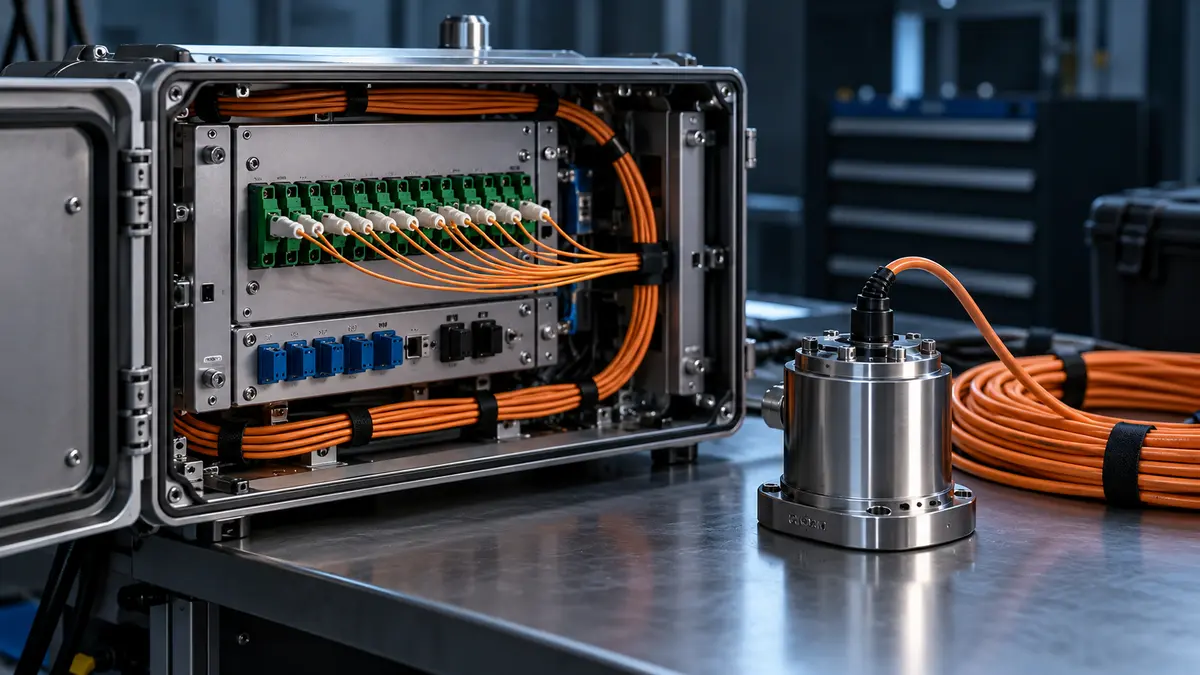
Fervo’s October 2024 seismicity account described a monitoring network developed with the University of Utah and Lawrence Berkeley National Laboratory. It included fibre-optic sensing in deep boreholes, shallow-borehole seismometers, strong-motion accelerometers and a surface nodal array. The company put the resulting data stream at approximately 1.3 terabytes per day. Instruments operating at different depths and locations supported observation of reservoir-scale activity and ground motion around the project.
The company reported five events above magnitude two during stimulation, classified as yellow under its traffic-light system. Their reported local magnitudes ranged from 2.09 to 2.65. Fervo described operational responses intended to reduce activity while seismicity subsided. Red classification required an immediate pause, and the company said that threshold had not been exceeded during the reporting period. These were the operator’s classifications and observations for a particular stage of development. The monitoring account distinguished drilling, stimulation and flow testing, with greater seismic activity observed during stimulation. Its event record does not set a limit on the magnitude of every possible future event.
A second monitoring period adds new observations
The April 2025 update covered November 2024 through March 2025. During that period, Fervo drilled five additional wells and completed stimulation on another well pad. An idle horizontal well served as a dedicated observation well, supplementing a vertical fibre-optic installation extending approximately 9,500 feet. The additional installation followed the horizontal observation well alongside the stimulated wells. Combining microseismic measurements, pressure information and fibre-derived strain observations provided additional information about fractures, faults and fluid pathways.
Fervo reported six yellow-classified seismic events and no red-classified events over the period. Its largest recorded event had a local magnitude of 2.97 and occurred on March 3, 2025. The operator paused activity for six hours, then extended the pause by another 24 hours after reviewing the response and the stimulation objectives already achieved. The company reported that no further fluid or proppant injection occurred during the remaining stimulation phase. These observations supplemented the earlier monitoring period. They concerned a new campaign and new events, while the underlying management approach continued to rely on real-time measurements and operational responses.
A deeper appraisal well
In June 2025, Fervo announced drilling and logging results from the Sugarloaf appraisal well. It reached a true vertical depth of 15,765 feet in 16 drilling days. The company projected a bottom-hole temperature of 520°F after full thermal equilibration. That expected stabilised temperature differed from a temperature measured while drilling or immediately after circulation. The well investigated a deeper and hotter resource than the earlier development wells.
The drilling results included a maximum bit-run length of 3,290 feet, a maximum average penetration rate of 95 feet per hour and an instantaneous rate exceeding 300 feet per hour at depths greater than 15,000 feet. Each measure described a different aspect of performance. Fervo also announced an independent geothermal reserves assessment by DeGolyer & MacNaughton, using drilling information, geological models and production tests. Estimates of heat in place and recoverable resources informed the development assessment. They described the underground resource and the assumptions for recovering it, rather than electricity already being generated by a completed plant.

Electrical equipment for pumps and power blocks
Surface infrastructure developed alongside the wells. In January 2026, ABB announced a supply agreement for Cape Station’s electrification and motor-control systems. Its package included more than 80 medium-voltage drives for managing critical equipment, together with motors and generators. Pumping is an important electrical load in a system that circulates water between the surface and an engineered reservoir. The agreement concerned equipment to support the expanding project.
ABB’s announced scope also covered the following components:
- low-voltage motor-control centres;
- medium-voltage switchgear;
- prefabricated electrical houses for well-pad drive systems and associated infrastructure.
Reading the longer pilot record
By April 2026, Fervo’s Project Red account covered more than 614 production days. It estimated average electrical output of 2.1 megawatts gross and approximately 1.4 megawatts net. The appendix explained that gross generation was calculated with an organic Rankine cycle model incorporating ambient temperatures. Parasitic pumping and auxiliary loads were measured at the well pad. These model-derived electrical estimates therefore require a different interpretation from a direct generating-meter record. They also cover different conditions from the earlier peak well test.

The operator reported more than 500 days without observable thermal decline, followed by a decrease of approximately 2.5°F. Immediate fluid recapture was around 70% under the pilot’s steady-state conditions. Fervo expected later well configurations to improve recapture, but those expectations were separate from the pilot measurement. Its stated 98.4% uptime excluded extended outages attributed to surface facilities and grid infrastructure. The account described Project Red as a learning platform with relatively short laterals and close well spacing. Its operating data supported model calibration and further trials.
The first Cape Station commercial block
Cape Station’s first GeoBlock reached commercial operation on September 30, 2026, according to Fervo’s October 1 announcement. The block had synchronised with the grid on September 24 and achieved 33 megawatts of net power, meeting its contractual production threshold. Fervo said revenue had begun under its power purchase agreement. The company described Phase I as approximately 100 megawatts across three 33-megawatt blocks. Commissioning continued on the other two, with commercial operation expected by January 1, 2027. An additional 400-megawatt phase was under construction for expected operation in 2028. That later scope expanded the earlier 400-megawatt project plan to approximately 500 megawatts. The first block’s completed milestone and the remaining construction programme thus occupied different stages of the same development.
Leave a comment