
EnerVenue: nickel–hydrogen cells and the route to Changzhou production
EnerVenue prepares its Changzhou battery line. Nickel–hydrogen research, electrode suppliers, vessel revisions and field pilots trace its route into production.
A production start in Changzhou
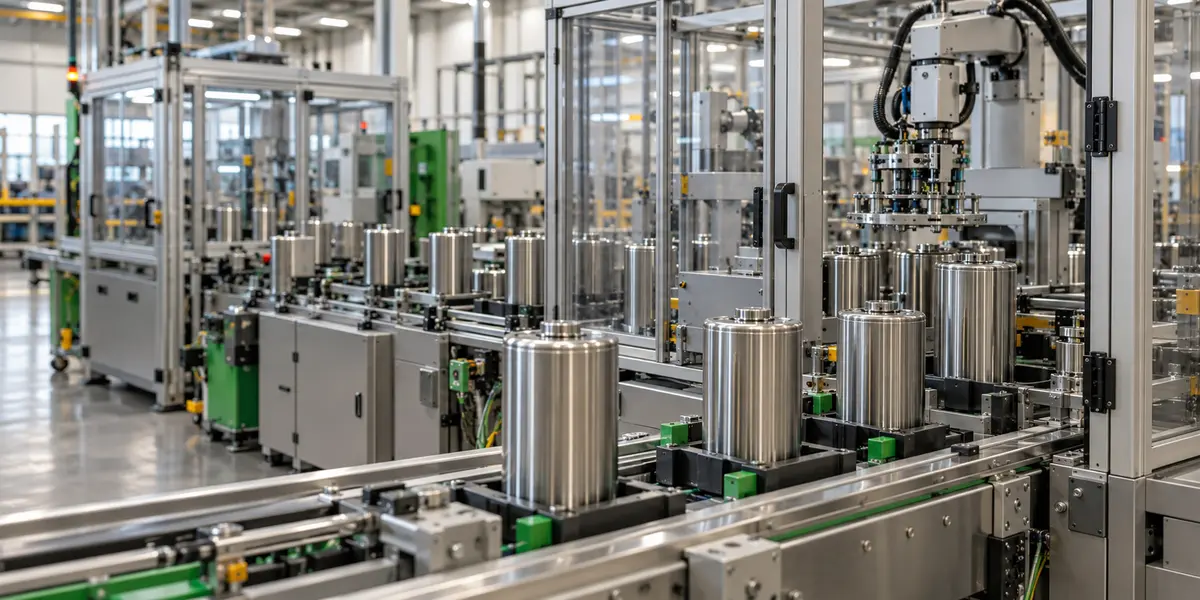
EnerVenue plans to start mass production of nickel–hydrogen batteries in Changzhou, China, on September 24, 2026. Chief executive Henning Rath told Reuters that the location offered engineers and closely grouped automation, hydraulics and pneumatics suppliers. The company retains research and development in Fremont, California.
Rath put the factory’s automation level at about 95%, with employment expected to reach about 400 by year-end. He gave a $20 million–$50 million investment range. Annual capacity is targeted at 250 megawatt-hours in 2026, rising to one gigawatt-hour by the third quarter of 2027. Similar factories in North America, the Middle East and Europe are planned from 2028, with locations to be selected in 2027. These are expansion targets ahead of the Changzhou production start. EnerVenue abandoned the Kentucky factory plan in 2024 and subsequently redesigned both the battery and its factory.

Space heritage and terrestrial materials
Nickel–hydrogen chemistry has a much longer operating history than EnerVenue itself. NASA first used the technology for a major low-Earth-orbit project when the Hubble Space Telescope launched in 1990. Nickel–hydrogen batteries also supplied the International Space Station for more than 18 years before lithium-ion replacements took over. That heritage belongs to the underlying chemistry, rather than to EnerVenue’s present commercial products.
A nickel–hydrogen cell combines a nickel positive electrode with a hydrogen-catalyzed negative electrode inside a pressure vessel. Charging generates hydrogen; discharge consumes it again. Traditional designs used expensive platinum at the hydrogen electrode. Yi Cui developed a way to remove that precious-metal requirement, helping make terrestrial storage applications more economically approachable. NASA’s technology-transfer history connects this change in materials with EnerVenue’s development for power plants, businesses and homes.
A laboratory catalyst with a different cost basis
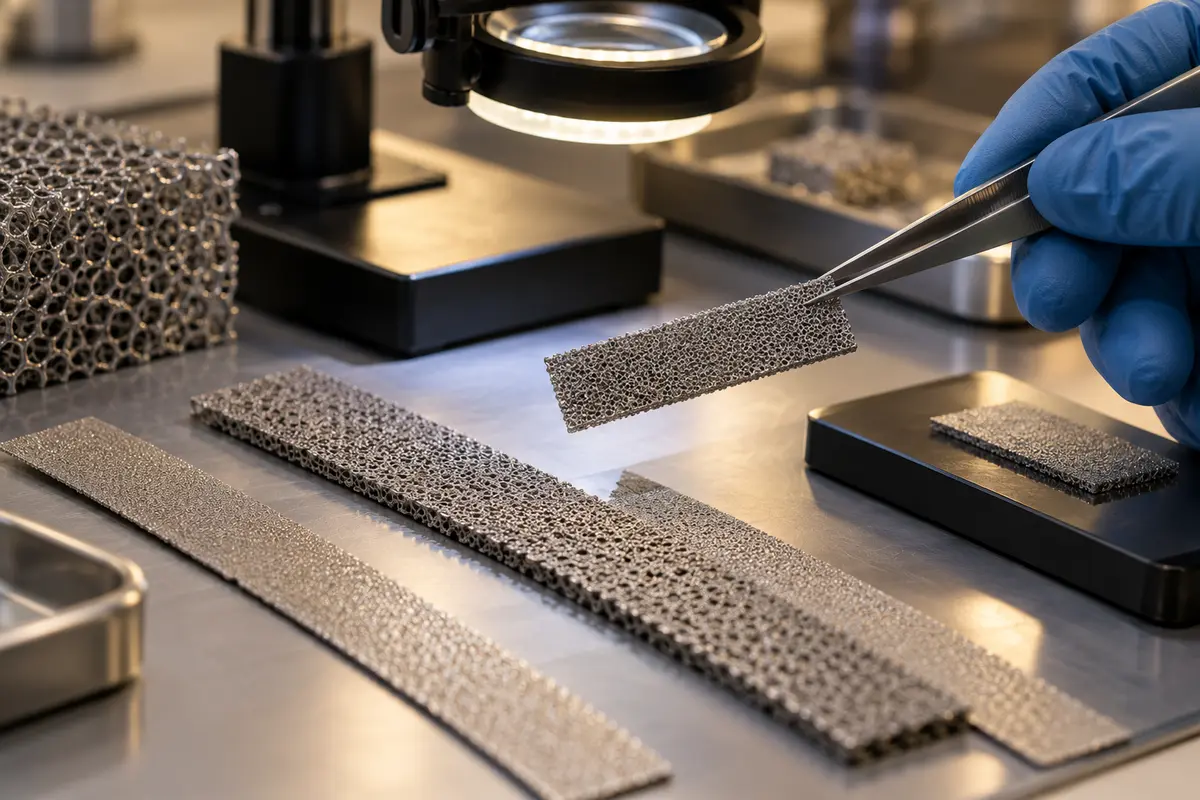
Wei Chen, Yang Jin, Jie Zhao, Nian Liu and Yi Cui developed a nickel–hydrogen laboratory battery using a nickel–molybdenum–cobalt catalyst instead of platinum. Their study, published online on October 29, 2018, paired a nickel hydroxide cathode with a porous nickel-foam hydrogen electrode in 30% potassium hydroxide electrolyte. The alloy catalyzed both hydrogen evolution during charging and hydrogen oxidation during discharge.

The researchers tested different cell formats. A cylindrical cell delivered about 640 milliamp-hours, while a smaller Swagelok-format cell showed negligible capacity decay over 1,500 cycles. Their approximately $83-per-kilowatt-hour estimate concerned materials utilization. It was not a quoted price for an installed storage project. The approximately 140 watt-hours-per-kilogram calculation excluded the steel vessel. These laboratory measures therefore have different boundaries from a commercial system’s purchase price or installed energy density. The original PNAS study established a catalyst and cell-development result, without specifying the proprietary construction of EnerVenue’s later commercial generations.
Electrode supply and production equipment
EnerVenue separated two manufacturing requirements in agreements announced on June 29, 2022. Precision Process became its exclusive supplier of plating manufacturing equipment under a five-year agreement. A second five-year agreement made Precious Plate the exclusive supplier of plated anode materials. The two suppliers shared a governance entity, while their responsibilities covered different parts of the production chain: building the machinery and providing the plated material.
Precious Plate established a dedicated manufacturing location in Niagara Falls, New York, for EnerVenue’s requirements and protection of its intellectual property. At the time, the plan was to support five gigawatt-hours of annual anode production capacity by 2026, with additional land secured for expansion beyond ten gigawatt-hours. Those figures were supplier expansion plans announced in 2022. They do not establish the capacity subsequently delivered to Changzhou. Precision Process’s work involved custom reel-to-reel and roll-to-roll plating equipment, while Precious Plate applied thin electroplated metal layers to base materials.
Vessels as configurable storage components
EnerVenue introduced its second-generation Energy Storage Vessels on December 6, 2022. The format was intended to give integrators more freedom to arrange and stack batteries for installations of different sizes. The company emphasized configurable large-format components rather than a single fixed plant layout. Flexible charging and discharging rates, including full depth of discharge, formed part of the advertised operating envelope.
At launch, EnerVenue described an expected life of 30 years and 30,000 cycles, with operation up to three cycles a day without rest. Its capacity-retention projection was 86% beyond 30,000 cycles. These were product expectations and projections, rather than results from a completed thirty-year terrestrial installation. The company said existing customer agreements covered seven gigawatt-hours of vessels and planned to begin shipping in 2023. Commitments to supply batteries and a planned shipping date describe the commercial pipeline; they are separate from evidence of batteries delivered and commissioned.
More capacity and closer vessel monitoring
A further vessel revision followed on September 6, 2023. EnerVenue claimed 150% more energy-storage capacity, a 100% increase in energy density and a 150% improvement in nominal power performance compared with its previous versions. The comparison was between EnerVenue product generations. It did not measure an advantage over a particular lithium-ion system or describe the fourth-generation Aqueous Metal Cell introduced later.

Each revised vessel incorporated monitoring for three operating variables:
- Temperature, to follow the vessel’s thermal condition.
- Pressure, to follow conditions inside the vessel.
- Voltage, to support vessel and state-of-charge monitoring.
EnerVenue also described improved performance across hot and cold conditions, without publishing a numerical temperature range in that announcement. The revised vessels were intended for two- to twelve-hour discharge rates and up to three daily cycles. Certification and standards testing for the new version were still under way at launch. The timing matters: the announcement described a product transition and its intended operating characteristics, with qualification work continuing alongside plans for larger-scale manufacture.
From individual vessels to a preassembled rack
On November 30, 2023, EnerVenue introduced the Energy Rack as a preassembled package containing vessels, battery-management hardware, wiring and connections. It offered 150- and 102-kilowatt-hour configurations, with rack sizing intended for 1,500- and 1,000-volt direct-current systems. Integrators could combine the units within customized containers or buildings, using indoor structures or outdoor-rated enclosures as appropriate to the installation.

The racks could connect in a line or stack up to three levels high, and individual components remained serviceable. EnerVenue’s commercial objective was to reduce integration work and installation labor by supplying a larger assembled building block. Chief revenue officer Randall Selesky associated the design with customers seeking scalable architecture and a compact footprint. Orders opened with shipments planned for 2024. These specifications describe that historical rack launch. Later use of the Energy Rack name with new cells does not make every earlier voltage, configuration or shipment plan a current specification for the 2026 product.
What the reported safety tests established
EnerVenue announced on May 2, 2023, that its Energy Storage Vessels had completed cell-, module- and unit-level testing under UL 9540A. The company reported no flames during the cell-level induced thermal-runaway test. It separately announced certification to UL 1973, covering stationary battery safety under normal and abnormal conditions, including electrical, mechanical and environmental considerations.
The two items addressed different questions. UL 9540A evaluated thermal-runaway fire propagation through progressively larger test arrangements. UL 1973 certification addressed the battery’s safety requirements. Neither statement was an announcement that a complete installed energy-storage system had been certified to UL 9540. The reported results concerned the vessels evaluated at that time. They should not be treated as a test report for every later cell generation, enclosure or site configuration. EnerVenue promoted reduced fire-safety complexity as a commercial benefit, but its public announcement supplied specific testing and certification milestones rather than a complete set of project-level operating permissions.

Design life and the capacity guarantee
EnerVenue’s Capacity Assurance program, introduced on October 11, 2022, offered a 20-year, 20,000-cycle extended warranty with at least 88% battery capacity remaining. Customers selecting the extension obtained a contractual capacity commitment over a defined period and cycle count. The company positioned the program around the long investment-recovery periods of stationary storage projects and described its operating terms as simple, with no hidden exclusions.
That warranty term differs from the company’s longer design-life claims. A projected thirty-year operating life describes an engineering expectation, while an extended warranty sets a specified commercial coverage period. The program did not turn the first twenty years into observed service history. EnerVenue promoted low degradation, limited maintenance and avoidance of battery augmentation as reasons for offering long coverage. Those remained its product and commercial claims; the published warranty announcement did not provide thirty years of field measurements or the full contractual documentation for an individual installation.
RWE’s pilot focused on operating behavior
RWE purchased Energy Storage Vessels for a pilot at its Milwaukee-area testing facility, EnerVenue announced on December 3, 2024. The testing covered cycling flexibility, charge and discharge characteristics, storage duration, temperature performance and efficiency. RWE intended to use the resulting data to assess potential applications, rather than treating the purchase as a commitment to a fleet-wide deployment.

Andrea Hu-Bianco, RWE Clean Energy’s senior vice president of engineering, associated the work with evaluating multiple storage technologies for growing energy demand. Guy Moore, director of battery energy storage system integration, led the Milwaukee testing facility. Its remit included lithium and beyond-lithium batteries, power-conversion systems and controls. That setting put EnerVenue’s vessels into an operator’s evaluation program alongside the surrounding electrical technologies needed for storage projects. The announcement identified the pilot’s questions and participants. It did not publish measured efficiency, temperature-performance results or a subsequent decision to adopt the vessels across RWE’s operating portfolio.
A fourth-generation pilot with electric-bus charging
By May 14, 2026, a Towngas-owned and operated pilot in Jintan, Changzhou, was using EnerVenue’s fourth-generation Aqueous Metal Cells. The installation linked on-site renewable generation with electric-bus charging. Fifty cells provided a combined 150 kilowatt-hours in a customized Energy Rack, together with an inverter and battery-management system inside an outdoor-rated housing.
EnerVenue described continuous charging and discharging over two- to four-hour periods to follow demand. The company also reported laboratory testing from −20°C to +60°C for its cells. That laboratory temperature range was distinct from a published record of temperatures experienced at the pilot. Towngas managing director Peter Wong Wai-yee associated the trial with assessing safe, reliable and low-maintenance storage for renewable energy. The installation provided a real-world operating context for the new generation. Its existence did not establish that the cells had already completed their 30,000-cycle design life. More demonstration systems with other partners were planned, alongside the manufacturing expansion.

The earlier Kentucky factory plan
EnerVenue’s manufacturing ambitions initially centered on the United States. Kentucky officials announced a Shelby County project on March 28, 2023, involving a planned $264 million first phase and 450 full-time jobs. A one-million-square-foot facility on 73 acres was intended to accommodate design and process validation, manufacturing and testing. Jorg Heinemann was chief executive when the location was announced.
The proposed state support was conditional. A preliminary 15-year Kentucky Business Investment agreement offered up to $10.3 million in tax incentives, tied to investment and annual employment and compensation targets. The targets included creating and maintaining 450 Kentucky-resident full-time jobs. Recruitment, placement and training resources were also available. The proposed incentives were not an announcement of money already paid, just as the employment target was not an existing workforce. Company leaders also envisaged later domestic expansion beyond twenty gigawatt-hours of annual capacity, a longer-term aspiration separate from the first phase’s investment and facility dimensions.
Capital for the changed manufacturing footprint
On March 31, 2026, EnerVenue announced Rath’s appointment as chief executive alongside a $300 million extension of its Series B preferred-stock financing. Full Vision Capital led the extension, which also included a new investor. EnerVenue assigned the capital to scaling manufacturing in Changzhou, developing its supply chain and expanding commercially, while research and development remained in Silicon Valley.
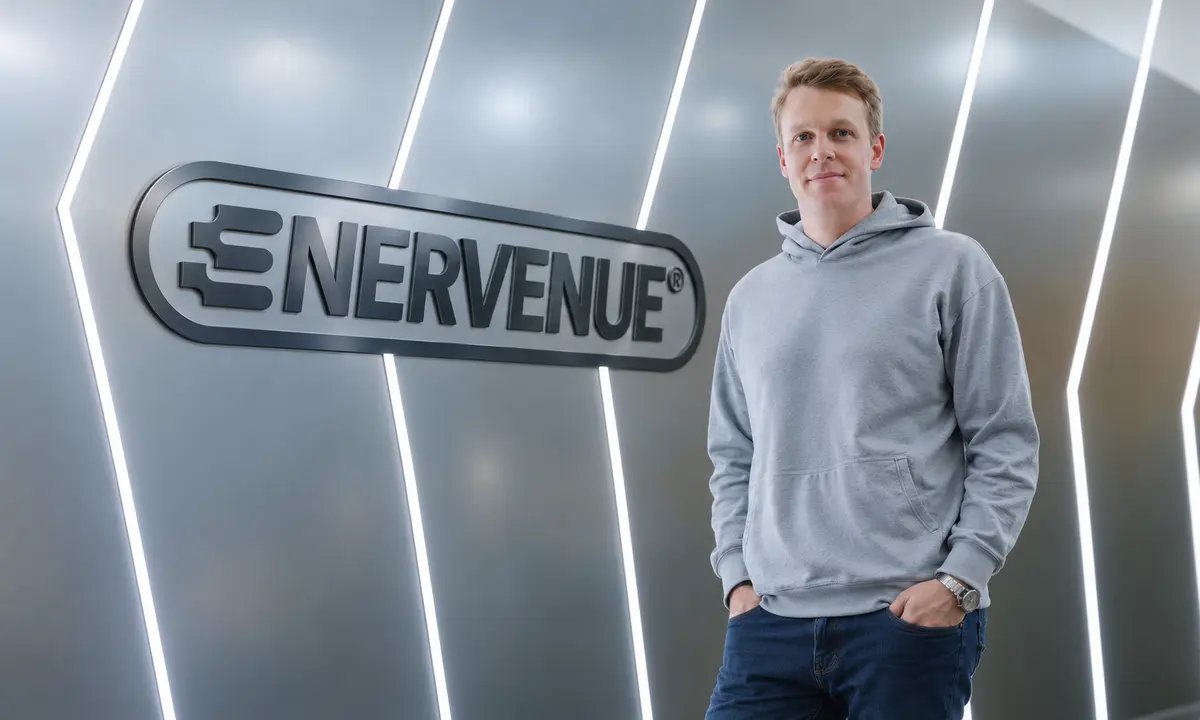
Rath said the near- and medium-term targets of 250 megawatt-hours and one gigawatt-hour were fully funded. Funding those targets did not mean either output rate had already been achieved. Full Vision managing partner Alan Chan, an EnerVenue co-founder, associated the investment with Rath’s industrial-scaling strategy. Before EnerVenue, Rath had been managing director and chief supply chain officer at residential renewable-energy business Enpal. The financing announcement connected that experience with EnerVenue’s transition from technology development to higher-volume production, and identified further commercial expansion across Asia, the Middle East and Europe as planned work.
Commissioning before sustained industrial output
Equipment installation and commissioning were still central to EnerVenue’s factory updates on September 9, 2026. Guy Henshilwood described engineers refining processes, making automation consistent and building quality into production rather than relying solely on final inspection. The company had shown machinery arriving and being installed, alongside work on the line’s processes and controls. Its fourth-generation cell had been developed with manufacturability among the stated priorities.
EnerVenue distinguished opening a production line from demonstrating industrial scale. In its explanation, the latter required running equipment consistently, producing cells and delivering them to customers. Continued learning and process improvement would follow the opening. That distinction defines the next stage for Changzhou: the planned start supplies a manufacturing milestone, while sustained production and customer deliveries must establish the operating record. The pre-opening account did not publish a verified production yield, a completed delivery total or measurements proving that the line had already maintained its targeted throughput.
Leave a comment