
EFKO’s investment plan links food factories with new technologies
EFKO’s 2025 investment plan covered conventional food production and innovation. Dated projects span factory expansion, ingredient development and research.
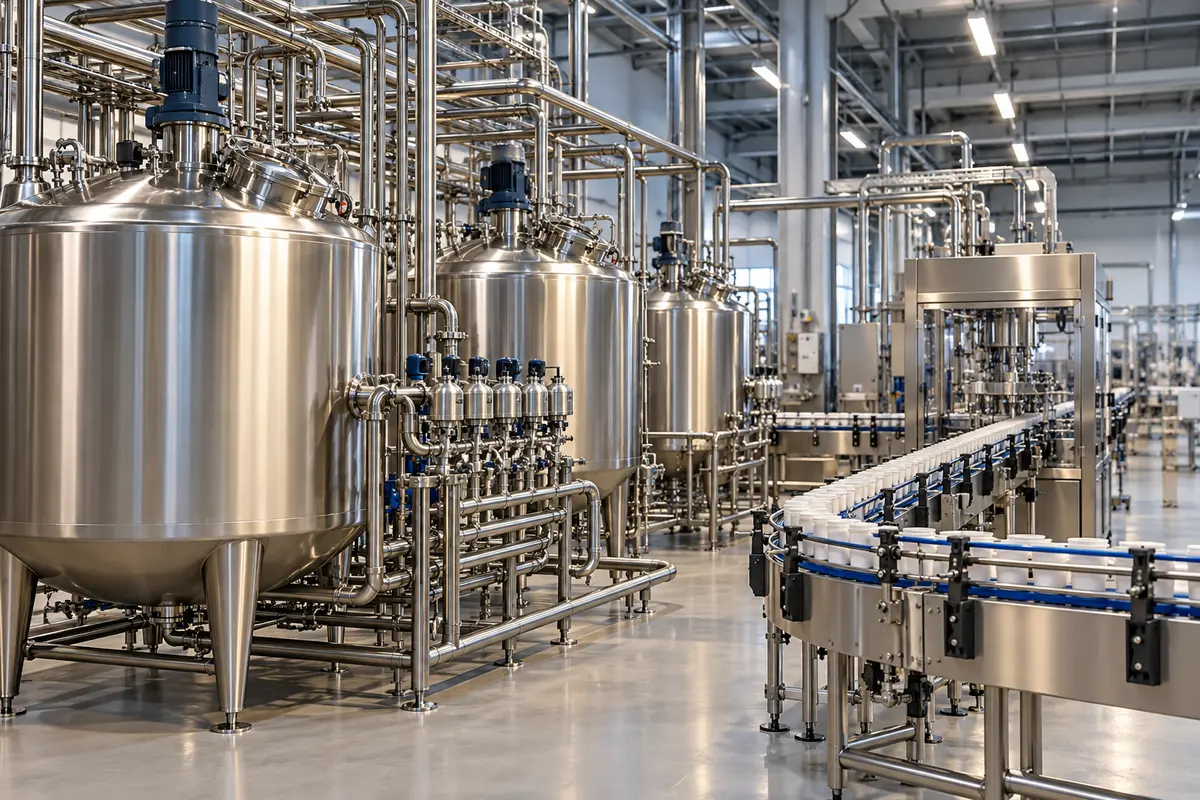
An investment plan spanning established and new businesses
EFKO, a food producer in Russia, planned business investment exceeding 40 billion rubles in 2025. Chairman Valery Kustov gave that forecast at a July 2 meeting with Prime Minister Mikhail Mishustin. He reported 30 billion rubles invested in 2024, divided equally between innovation and conventional food operations, alongside 20% sales growth.
The group’s oilseed-processing capacity exceeded 4.5 million tonnes annually. Production facilities were in the Belgorod, Voronezh, Lipetsk and Sverdlovsk regions, Krasnodar Territory and Kazakhstan. Its diversification included plant-based foods and biotechnology. Kustov identified a 12-billion-ruble sweet-protein plant targeted for opening at the end of 2025; production was still on pilot lines. He described biosynthesized fats as less mature. EFKO processed sunflower, soybeans and rapeseed, producing oils, fats, margarines, mayonnaise and ketchup. The annual plan did not specify an allocation to each project. Interfax.
Preparing a new food-production site in Tula
By June 11, 2025, utility connections were complete at EFKO’s site in the Uzlovaya Special Economic Zone. Equipment installation was being prepared. The company had signed its initial investment agreement at the St. Petersburg International Economic Forum in 2024 and expected the first mayonnaise-production stage to launch in autumn 2025. Its announced full annual capacity was 149,000 tonnes. EFKO intended to invest more than 12 billion rubles in the site during its first three years of development.

Vladislav Romantsev, director for strategic development, linked the location to shorter deliveries to major retail chains in the Central Federal District. He described the transport-distance calculations as favorable for delivery timing and equipment depreciation. The initial recruitment programme covered production and engineering roles, with about 500 jobs planned for the first phase. Sloboda mayonnaise would be manufactured there. EFKO had produced the brand since 1998 and emphasized its use of the group’s own liquid egg yolk. EFKO also estimated Sloboda’s category share at 21.7%.
A separate agreement for bottled vegetable oil
EFKO and the Tula regional government signed a second-phase agreement at the St. Petersburg forum on June 20, 2025. The new project concerned bottled vegetable oil. Mayonnaise remained the first project at the Uzlovaya site, where utility infrastructure had been connected and equipment-installation preparations were underway. Governor Dmitry Milyaev put the investment for the second phase at 10 billion rubles and pledged regional support for its implementation.
Romantsev expected the combined site eventually to become one of EFKO’s four largest and most automated production locations. He envisaged around one thousand jobs there. That site-wide employment expectation had a different scope from the approximately 500 first-phase positions announced earlier in June. The cooperation involved a new production category within the same developing location. The second agreement therefore described an additional project and its investment estimate, while the first production installation was still being prepared. Both announcements concerned development extending beyond the date on which the agreements were signed.

Operating capacity and a further expansion target
By June 4, 2026, the Tula plant was producing mayonnaise and sauces under the Sloboda and Master Gurme brands. Romantsev signed a memorandum with Alfa-Bank at the St. Petersburg forum for additional capacity. He described an existing annual capacity of 149,000 tonnes and a proposed increase to 270,000 tonnes. The estimated investment exceeded 10 billion rubles. Those figures concerned production capability; they were not a statement that the plant had manufactured either volume during a completed year.
Denis Kutasov, Alfa-Bank’s senior vice-president and head of its large corporate clients department, presented the bank’s participation as support for the food industry and new employment. EFKO associated the expansion with more than 1,000 jobs and expected the site, at design capacity, to supply approximately one-third of domestic demand in its product categories. The memorandum and capacity target were prospective. The company’s June 2026 account established operating mayonnaise and sauce production while separately describing the additional investment and output capability it intended to develop.
Functional ingredients from oilseed processing
EFKO opened its Food of the Future plant in Alekseyevka on March 5, 2024. President Vladimir Putin participated by video link. The planned product range comprised soy isolates, soy concentrates and vegetable fibre for meat processing, bakery and confectionery applications, as well as dietary and sports-nutrition products. Director general Evgeniy Lyashenko described the first stage as capable of producing about 5,000 tonnes of finished product annually. This was a product-capacity statement, with its own first-stage scope.
Lyashenko said the group’s innovation-centre specialists and Russian scientists had developed the technology, while company engineers designed the production lines. Governor Vyacheslav Gladkov associated the opening with more than 130 additional jobs in the Belgorod region. He also referred to preparations for a future enzyme plant, distinguishing that project from the facility being opened. The protein-and-fibre operation supplied ingredients to other food manufacturers. Its industrial role combined oilseed processing with the development of ingredients used across several finished-food categories.
Research, testing and sales within the feed business
EFKO’s Smart Farm project already connected several specialist functions before the 2025 investment announcement. An effective-feed laboratory at the Biruch Innovation Centre developed products; a dairy-farming laboratory performed analyses for livestock farms; and a separate division scaled production and handled sales. In January 2023, the group reported that sunflower press cake containing its FEED PRO SF 90 protected protein had received an Agros exhibition award. The company had entered the protected-protein market in spring 2022.
The feed range also included ULTRA FEED F and EXTRA FEED protected fats and CALCI FEED MAX calcium salts of fatty acids. Marina Gerasimova led EFKO’s Dairy Competence Centre. The oil-and-raw-material division served other livestock-feed markets through oilseed processing. Its January 2023 account identified six extraction plants in the Belgorod and Lipetsk regions, Krasnodar Krai and Kazakhstan, with combined capacity above 3.5 million tonnes annually. That dated divisional figure described processing capability. Gerasimova described the additives as intended to support animal health, reproductive performance and milk quality.

A planned feed-enzyme facility
A January 12, 2024 agreement between EFKO and the Belgorod regional government concerned another part of the ingredients business: a feed-enzyme facility. Governor Vyacheslav Gladkov and innovation director Rostislav Kovalevsky signed the cooperation agreement. EFKO estimated investment at 9.4 billion rubles and planned capacity at 2,400 tonnes of enzymes per year. Design work had started, and the company then suggested operations could begin in early 2026.
Kovalevsky described cooperation with research centres to develop enzymes for food manufacturing and livestock farming. He said EFKO had already started industrial production of phospholipase and used its own enzymes in mayonnaise. Other enzyme technologies remained under development. The proposed feed plant therefore belonged to a broader programme of ingredient development, with its own capacity and investment estimates. Kovalevsky expected the project to create biotechnology jobs and reduce dependence on imported feed ingredients. These were anticipated effects of implementation, rather than reported results from an operating 2,400-tonne plant.
Developing plant-based products and customer channels
At Prodexpo in February 2025, EFKO reported receiving a Roskachestvo vegan certificate for Hi! plant-based milk. Deputy industry and trade minister Roman Chekushev presented the certificate. The company described the assessment as compliance with the new standard for plant-based products and said its plant-based meat had previously undergone a similar inspection. The announcement concerned the identified products and their certification, alongside the group’s existing work on food alternatives.
Fedor Mogutnov, who led EFKO’s HoReCa division, said the company had spent more than three years developing dishes with plant-based meat alternatives alongside partners. It was also expanding its plant-based milk range. Brand division director Evgeny Shulepov placed these products within a portfolio that included bottled oil, mayonnaise, ketchup, sauces, margarine and plant-based butter. Shulepov traced EFKO’s branded business to sunflower oil almost three decades earlier. EFKO also presented products at the RUSSIA HALAL stand, where the exhibition’s discussion included product-standard conformity.
A five-year robotics proposal with HSE
EFKO presented a proposed research-and-production association with the Higher School of Economics in September 2025. Innovation director Rostislav Kovalevsky outlined the project to science and higher education minister Valery Falkov. The partners aimed to establish a pilot full-cycle robotics operation within five years, covering programming, assembly and testing. The intended product range included artificial-intelligence tools, humanoid robots for warehouses, logistics and industrial applications, and components for robotic systems.
The project was intended for HSE facilities in Moscow, with EFKO investment estimated at up to 1.5 billion rubles. A visionary centre would undertake foresight research, while implementation work would investigate applications in the real economy. A supervisory board with government and scientific representatives was envisaged to assess the work. Kovalevsky connected the proposal to EFKO’s wider interests in biotechnology, sustainable energy, robotics and artificial intelligence. The five-year objective described a development programme and pilot production, not an announcement that a new factory was already supplying serial humanoid robots to customers.

Field data and an agricultural platform
EFKO introduced its Agrika digital platform at the Zolotaya Osen exhibition in October 2025. Romantsev presented the project to Mishustin. The service combined information from the agro-industrial sector’s unified digital system with Earth-observation data, weather stations, drones and users. Artificial-intelligence technologies processed the combined dataset.
Farm-management functions
- planning crop rotations;
- monitoring technological operations;
- supporting timely decisions about field conditions.
Integration with the operator Drone Service was intended to let farmers arrange monitoring or treatment by unmanned aerial systems through the platform. Romantsev described an interface bringing field information together and identifying potential problems. The project extended the group’s technological activity into farm management, upstream of food processing. Its announced functions concerned information and access to services. EFKO’s account did not supply measured yield improvements or a quantified return on farmers’ investment. The service introduction and its intended capabilities therefore had a different evidential status from the production capacities and construction estimates attached to the group’s industrial projects.
Shea processing and a cosmetics product line
EFKO Cosmetic presented a limited Ice Caprice skincare collection at the Bioprom forum in Gelendzhik in October 2025. The initial range comprised cleansing foam, toner and a daytime cream. It used EFKO shea butter, with a Kamchatka-inspired plant complex. The cosmetics manufacturing operation was in the Voronezh region, while the group processed shea nuts in Taman, Krasnodar Krai. Domestic processing of that ingredient was distinct from growing the tropical crop domestically.

Romantsev linked the shea-processing operation to the group’s deep-water port, logistics and oil-refining experience. He said its capacity could cover the requirements of the domestic cosmetics market, a company assessment rather than a quantified market-share result. EFKO Cosmetic’s wider range exceeded 300 stock-keeping units across personal hygiene, household detergents and skincare. It manufactured its own brands, retail chains’ private labels and individual products for other brands. The Ice Caprice line was available through OZON, Wildberries and Yandex.Market. Ingredient processing and consumer-product manufacturing thus appeared in separate locations and customer channels within the same group.
Microbial lipids at the sample stage
In March 2026, EFKO displayed samples of a biotechnological cocoa-butter substitute at the Future Technologies Forum in Moscow. Industry and trade minister Anton Alikhanov explained the product to Putin as a route to producing the ingredient without growing cocoa beans. EFKO identified it as its second product based on precision fermentation, following its sweet-tasting protein. The presentation concerned a technological sample and the group’s development approach.
Romantsev described feeding modified nutritional yeast with glucose to obtain lipids. He characterized the resulting oils as biochemical analogues of vegetable oils and linked the choice of cocoa butter to its high price. Those descriptions were EFKO’s account of the process and its commercial rationale. They did not disclose a completed plant’s annual output, investment cost or evidence that Russian cocoa-butter imports had already been replaced. The March 2026 samples were a later development than Kustov’s July 2025 description of biosynthesized fats as a less mature area of work.
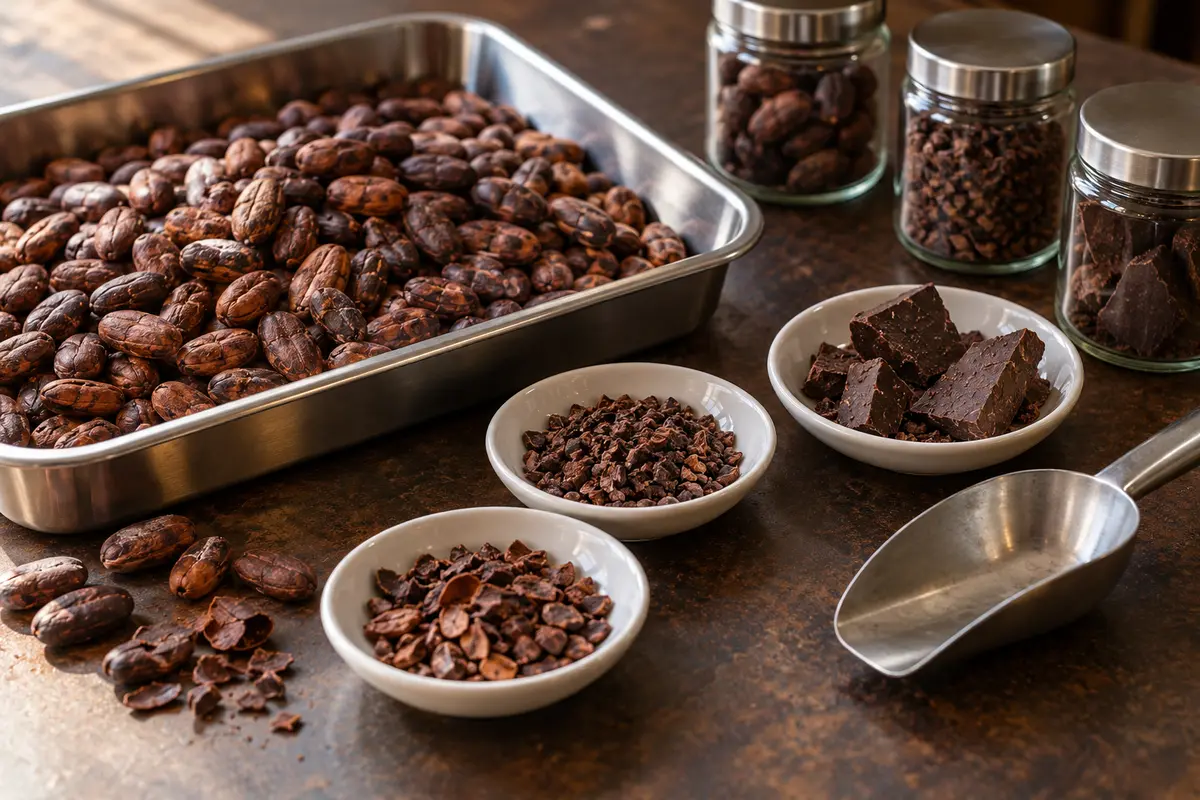
A separate pilot line for processing cocoa beans
EFKO announced a different cocoa project in September 2026: a pilot bean-processing line in Alekseyevka, with investment exceeding 80 million rubles. It used cocoa beans sourced from West Africa. The work covered raw-material selection, cleaning and roasting. Anna Lebedenko, director of cocoa products in the oils-and-fats division, emphasized procurement quality, explaining that growing conditions, drying and storage affected the flavor and quality of the beans.
Lebedenko described the project as in-house research and development for flavors and finished solutions for the company and outside customers. EFKO also envisaged supplying its Tula production facility with cocoa ingredients. The pilot line occupied premises previously used for mayonnaise production, which had moved to the new Tula site. This was a physical connection between the group’s established food-manufacturing network and a new ingredients activity. Bean processing used an agricultural raw material; the separately presented microbial-lipid work used yeast and glucose. The announcements concerned different processes, locations and development tasks.
Leave a comment